A First Racecourse Visit, Taken at Your Own Pace
A first racecourse visit is easier to enjoy with time to get oriented, choose a viewing spot and take in the rituals between races without rushing.
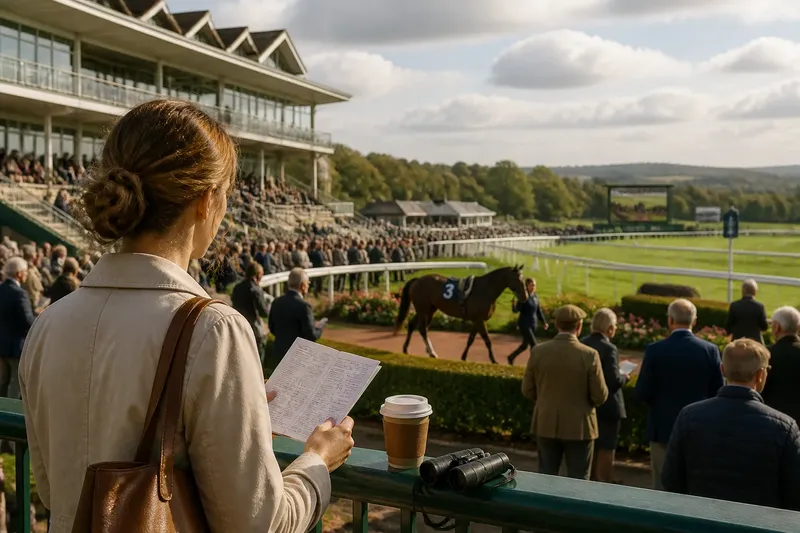
A first racecourse visit is easier when you treat the gaps between races as part of the day, not as dead time to be crossed at speed. Arrive with a little room to look around, decide where you want to watch from, and let the place explain itself before the first field goes to post.
Racecourses can feel confusing at first because several things happen at once: people study runners, queues form, announcements travel across the grounds, and the crowd shifts toward the track. A calm plan is not a rigid schedule. It is a way to handle the small snags that can otherwise make a pleasant outing feel like a series of missed turns.
When the entrance leaves you unsure where to go
What usually causes it: A racecourse may have separate entrances, enclosures or viewing areas, and the language on signs may not mean much to a newcomer. The entrance can also be busy enough that following the crowd seems easier than checking where it is going.
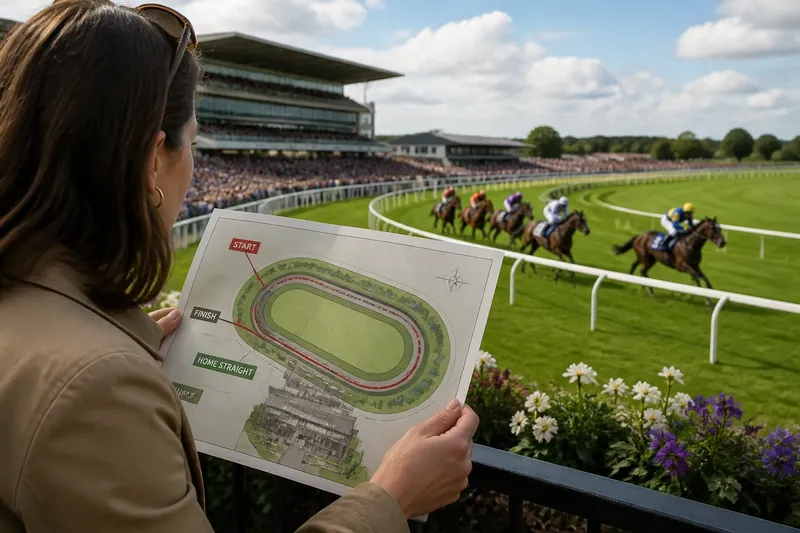
What to try: Pause after entering and find a site map, information point or staff member before setting off. Check where the parade ring, grandstand, trackside viewing and refreshments are in relation to each other. If your ticket names an enclosure, confirm which areas it includes rather than assuming every route is open.
Then choose one nearby landmark as a reference point: a distinctive stand, a clock, or the main entrance. It is easier to regain your bearings from a visible landmark than from a memory of several identical-looking corridors. Save the racecourse map on your phone if available, but keep an eye on signs too; maps are less useful when your phone is busy finding a signal.
When the schedule starts to feel like a race of its own
What usually causes it: A first-time visitor may try to attend every part of every race: check the runners, watch the horses in the parade ring, find a viewing place, follow the race and then move immediately to the next activity. The program can look like a set of obligations, though it is better treated as a menu.
What to try: Pick one or two things you most want to see, such as the horses in the parade ring or the field coming down the straight. Leave unclaimed time around them. If you miss a moment, resist the urge to make it up by hurrying to the next one; another race and another chance to watch will follow.
Say you arrive with enough time to visit the parade ring before one race, but the path is crowded and you cannot see clearly. Move to a less congested spot or watch from the edge, then head to your chosen viewing area with time to spare. The result you can expect is a calmer view of the horses and less scrambling before the start, not a perfect vantage point for every part of the day.
When you cannot decide where to watch
What usually causes it: The grandstand, a trackside rail and a screen each offer a different view. The rail can bring you close to the movement and noise; a seat may provide a broader view; a screen can make details easier to follow when the horses are distant. No single spot has to work for every race.
What to try: Choose a viewing place for the next race, not for the whole meeting. Check that you can see the track from where you stand, and notice whether the crowd is likely to obscure your view. If you want to hear commentary or announcements, stay where speakers are audible. If you would rather watch without a crush around you, step back from the busiest rail and use the wider view.
Be considerate of other spectators. Do not push through a settled crowd just before the start, and avoid blocking someone’s view with a raised phone for an extended stretch. A modest position with room to watch is often more enjoyable than a front-row place secured at the cost of spending the race guarding it.
When the crowd moves and you lose your bearings
What usually causes it: The approach to the parade ring or track can become busy as a race draws near, then empty quickly afterward. That change can make a route feel different from the one you just used, especially if you have been watching rather than memorizing turns.
What to try: Before leaving a viewing area, identify the next destination and the route back to your landmark. Follow official signs and give yourself space to move with the crowd rather than against it. If a passage is blocked or feels uncomfortable, stop somewhere clear and ask staff for another route.
There is no need to stand in every popular spot. You can watch a race from a screen, listen to the commentary, or choose a quieter area if the crowd becomes tiring. A first visit is a poor time to prove that you can tolerate discomfort; nobody awards points for staying wedged beside a railing.
When the day seems to be only starts and finishes
What usually causes it: The race itself is the obvious event, so it is easy to overlook everything that gives the meeting its texture: horses being led around the parade ring, the change in crowd noise as a start approaches, the movement of people between races, and the pause after a finish.
What to try: Choose one quiet interval to observe rather than fill. Watch how people make their way toward the next race, listen for the call to post, or notice the routine around the parade ring. You do not need to identify every detail or know what every person is doing. Looking carefully is a perfectly respectable first-day activity.
Keep your attention flexible. If you find a pleasant place to sit, stay for a while; if the view is poor, move before the next race rather than during it. The day has a rhythm, but you are not required to match the pace of the most determined person in the crowd.
What should you bring for a first racecourse visit?
Should you check the weather?
Yes. Look at the forecast for the course and dress for the possibility of changing conditions, including a light layer or rain protection if appropriate. Outdoor viewing can feel different from standing inside the grandstand.
Is a printed racecard necessary?
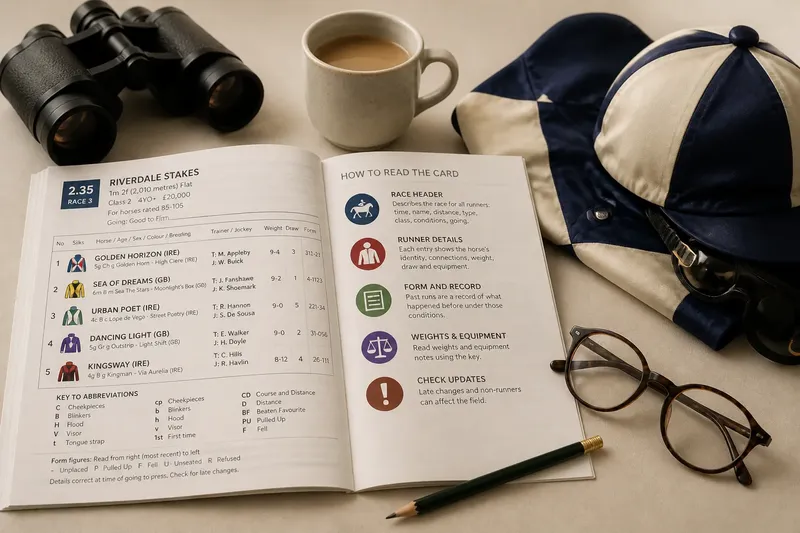
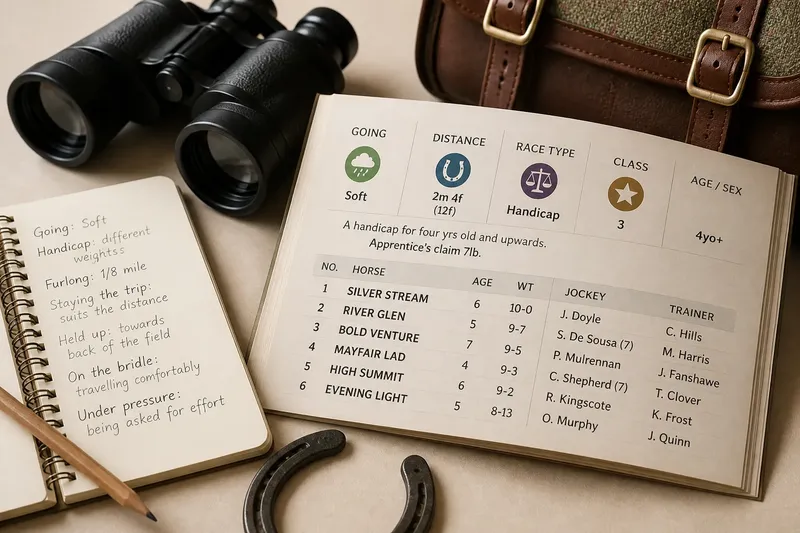
No. A printed racecard can be useful if you prefer paper, while a course app or posted information may cover the details you need. Choose whichever is easiest to consult without making the day feel like homework.
How early should you arrive?
Allow enough time to enter, locate the main facilities and choose a place before the race you most want to see. The right margin depends on the venue, ticket arrangements and transport, so check the course’s current visitor information before setting out.
What if you do not understand the betting?
You can enjoy the racing without placing a bet. If you choose to bet, decide in advance what you are comfortable spending and treat it as entertainment, not a way to fund the day. Ask staff about the process if you need help, and do not feel obliged to follow another person’s choice.
When a small practical problem distracts from the day
What usually causes it: Hunger, a dead phone battery or uncertainty about meeting companions can turn a minor inconvenience into a constant distraction. Racecourses are busy environments, and the next gathering point is not always obvious.
What to try: Agree on a simple meeting place with anyone you are attending with, ideally a clearly marked landmark away from the busiest routes. Check where water, food and restrooms are while you are still near the map. Keep essentials such as tickets and a portable phone charger accessible, and take a break if the noise or standing becomes tiring.
Venue arrangements vary, so check the racecourse’s own visitor information for ticket access, bag rules, transport and any accessibility support you may need. That small check removes avoidable uncertainty without turning the outing into a logistics exercise.
A first racecourse visit works best when you leave space to change your mind. Get oriented, choose a place for the next race, and notice what happens around it. The main practical advantage of going at your own pace is simple: you are more likely to remember the day as a place you visited, not merely a sequence of starts you tried to catch.