Flat Racing and Jump Racing: Two Different Formats
Flat racing and jump racing reward different kinds of attention: learn what each format asks you to watch, from pace and position to rhythm over obstacles.
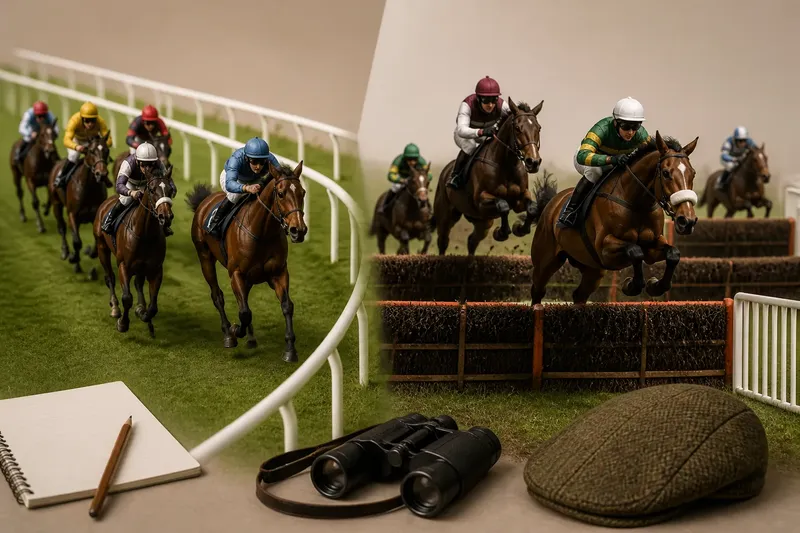
Flat racing and jump racing ask you to watch different things, even when both are run on the same course. In flat racing, the contest unfolds around pace, position, and the timing of a finish; in jump racing, obstacles make rhythm, jumping fluency, and recovery part of the visible story.
That distinction is useful for reading a race without turning it into a search for a likely winner. The format tells you where the drama may appear and what changes can matter as the field moves around the track.
Flat racing makes pace and position easier to follow
Flat races are run without hurdles or fences. The horses travel over an unobstructed course, so the central question for a viewer is often how the field distributes its effort. A horse can move forward early, settle behind others, or wait before making a late run. The shape of the race develops through those decisions and the room available to act on them.
Position is especially legible when the runners pass a recognizable marker or enter the home straight. A horse near the front may be setting the tempo, while one held back can be conserving energy for a later move. Neither position is automatically an advantage: the pace, distance, traffic, and course layout affect what it means.
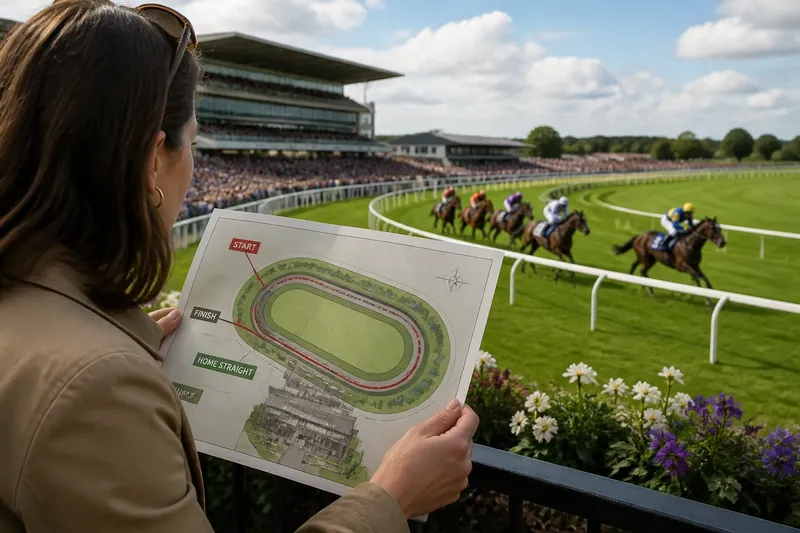
On a straight course, the field may spread across the width of the track, and a viewer can compare separate groups. On a turning course, runners must negotiate bends before reaching the finish, so where a horse sits in relation to the rail and other runners can become part of the unfolding picture. The track’s shape gives context, but the format remains an unobstructed race from start to finish.
Flat racing may suit a reader who likes tracking changes in speed and position without needing to interpret an obstacle at each stage. It also offers a clear way to follow a race as a developing line: who goes on, who settles, and who begins to close when the finish comes into view.
Jump racing adds repeated tests of rhythm
Jump races include obstacles, usually hurdles or fences, and those obstacles divide the race into a series of moments. A horse approaches, jumps, lands, and must regain its stride while continuing to race. That sequence makes fluency visible. A clean, balanced jump can preserve momentum; a hesitant or awkward one can alter the rhythm, even if the horse remains in contention.
Hurdles are generally lower and more flexible than fences, while fences present a more substantial obstacle. The distinction affects what a viewer sees at each jump, but both formats ask the horse to maintain a racing rhythm while clearing obstacles. The field’s spacing can change after a jump, and a horse that was close to another may land with a different amount of ground to make up.
Jump racing is not simply flat racing with interruptions. The obstacle is part of the race’s structure, and each approach can influence what follows. A horse must negotiate the course as well as sustain its pace. Viewers can notice whether the field bunches before a jump, whether runners land in stride, and how quickly they settle back into the race.
This format may suit someone who enjoys following a sequence of visible challenges rather than concentrating mainly on a single late change of pace. It gives the eye recurring points of attention. The finish still matters, of course, but the route to it contains more distinct tests.
The obstacles change what counts as a telling moment
In flat racing, an important moment may be a change of pace, a move into open space, or a runner being asked for effort in the straight. In jump racing, the same kinds of changes matter, but they sit alongside the quality and timing of each jump. A horse can appear well placed and then lose momentum at an obstacle; another can jump smoothly and draw closer without making a conspicuous burst of speed.
Watching the field as a whole helps. A horse’s position is relative to the others, and the gap between runners can widen or close for several reasons. A viewer need not decide whether a jump was technically perfect. It is enough to notice whether the horse lands balanced, keeps moving, and remains connected to the group.
Imagine a viewer following a jump race for the first time. The field approaches a fence in a compact line, and one runner lands cleanly while another checks its stride. The useful observation is not that the first horse must win; it is that the gap has changed, and the next stretch will show whether the second runner can recover its place.
In a flat race, the comparable observation might be a runner held behind a cluster as the field turns toward the finish. The viewer can watch whether it finds room and changes pace. In both cases, the point is to describe what happened, not to convert one moment into a prediction.
Distance and conditions shape the format’s demands
Both flat and jump races vary in distance, and the distance changes how the race is likely to unfold. A shorter flat race can make the opening pace especially noticeable, while a longer one may give more time for positions to shift. Jump races also range across distances, with longer contests asking viewers to follow how the field sustains its effort through repeated obstacles.
Ground conditions matter across both formats. The surface can affect how horses travel, and conditions that feel testing may make maintaining rhythm more demanding. In jump racing, the relationship between the surface and the obstacles is part of the viewing context; in flat racing, it can influence the pace and how runners move through the course. These are observations about the day, not stand-alone explanations for a result.
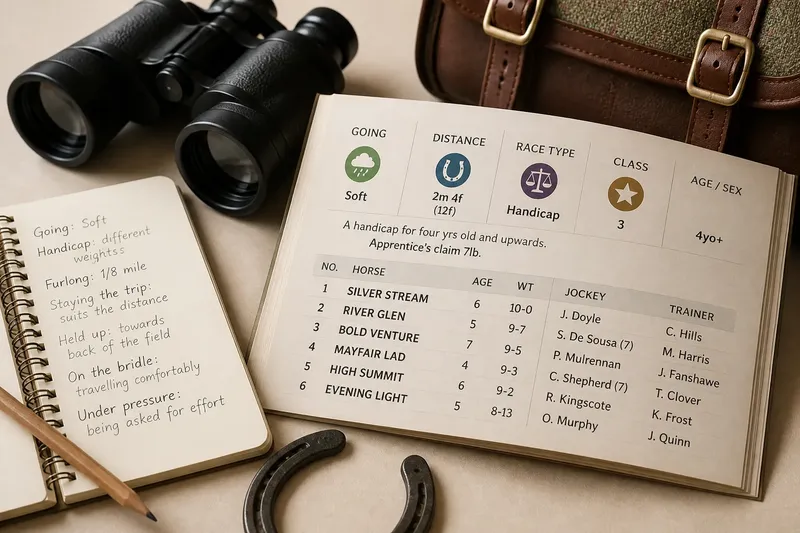
Race conditions, obstacle types, and course arrangements vary. For a particular event, the racecard and the organizer’s information explain the applicable details; follow those descriptions rather than assuming every course or race uses the same setup.
What should you watch in each format?
What should I watch first in a flat race?
Start with the field’s shape: note which runners go forward and which settle behind. Then watch how that arrangement changes as the finish approaches, especially if a runner finds room to make a move.
What should I watch first in a jump race?
Watch the approach and landing at an obstacle, then see whether each horse quickly returns to a steady stride. The spacing between runners can reveal whether a jump has changed the race’s shape.
Is jump racing always longer than flat racing?
No. Both formats include different distances, so the race’s length should be read from its specific conditions rather than inferred from the presence of obstacles. Distance and format are related features, not interchangeable labels.
Which format is easier to follow as a newcomer?
Flat racing may feel more direct if you want to track pace and position without an obstacle sequence. Jump racing may be more engaging if repeated, visible tests help you keep your attention on the field.
Choose by the kind of action you want to read
There is no need to treat one format as the more complete version of the other. Flat racing puts the emphasis on how runners distribute pace and position across an open course. Jump racing adds a recurring question: how does each horse negotiate the obstacle and carry its rhythm onward?
If you want a simple starting point, choose a flat race when you would rather watch the field’s movement and late changes, and choose a jump race when the sequence of approaches, jumps, and recoveries sounds more interesting. Either way, keep your attention on observable details: where runners travel, how the group changes, and what happens next.
That is the practical difference between flat racing and jump racing: not a promise about which race will be more exciting, but a guide to where to look. The format gives your attention a useful starting place, while the race itself supplies the particulars.